Chanukah With Ramana

THE TECHNIQUE IS SIMPLE: just lay on your back, breathing evenly, and take a complete and negative bodily inventory: “I am not my legs; I am not my feet; I am not my arms;” “I am not my mind;” et al.

Now: What’s left after everything else is taken away?

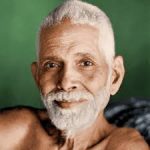
This admittedly (and deceptively) simple exercise comes from Ramana Maharshi, an inadvertent Hindu holyman whose “Self-realization” technique resulted in one of the great spiritual experiences of my life.

In the early 2000s, on the sixth night of Chanukah (our Festival of Lights), my copilot and I were honored to play host to a famous “New Age” rabbi (“R”). I also invited along a filmmaker (“F”) of my acquaintance, who had long wanted me to meet R; he arrived with a Hindu friend of his (“H”), and you may imagine our delight and surprise when R told us that F was his own beloved teacher!

R and we were anticipating a small crowd in our apartment, but the only guests were the sparse handful I just described. So the session turned into a metaphysical round-robin between R, F and H of various Eastern and Western spiritual figures. When one of them mentioned Ramana’s name, the trio became very animated and described the holyman’s negation-of-thought technique which, upon my own diligent practice later that night, produced a most startling and profound awakening.

My word-busy mind dropped away to reveal a deep connection to the wordless Source of all consciousness – a perception of the unspoken silence between one thought and another – an all-encompassing peace of mind – a vision of the vast and intimate Self beyond the ego, beyond even the apparent separation of one thing from another.

Even now, years later, I still can’t adequately describe what happened. (Which is, kind of, the point.) Time’s passage has almost dulled the experience’s immediacy, but not its effect, which inspired in me a fierce non-dualism (or if you prefer, an undying all-is-One-ism) – and which makes me happy, and grounded, every time I recall it.

Thanks, Ramana. Apparently, that’s just what I needed.

5 Thoughts: The ORIGINAL Matrix

1. WHILE I DON’T BEGRUDGE THE siblings Wachowski their success, and I don’t really believe they stole my idea, as the first populizer of something called “The Matrix” I feel I must firmly and finally speak my piece.

2. Make a circle with a dot in the center. The dot represents you. Within the circle is the sum of your knowledge. Outside the circle is the vasty unknown. The circle itself? I call that The Matrix.

3. This simple reality-diagram was created by me c. 1990, long before the first installment of the popular film series, as part of the work I did for Obscure Research Labs. Continue reading “5 Thoughts: The ORIGINAL Matrix”

The Knot’s Tale

THERE I WAS, TYING AN intricate bit of decorative knotwork in the Golden Hinde II‘s hold, and feeling more than a little proud of myself. I was then just a beginner at that sort of thing, and the glow of self-regard was warming my busy hands.

Comes the captain, a grizzled veteran of a hundred-and-one voyages in a hundred-and-one vessels, to peer over my shoulder. I paused, waiting for him to tell me how grand was my creation.

“That’s what it’s supposed to look like,” he said gruffly, and walked on.

To say I was crestfallen would be an understatement. Continue reading “The Knot’s Tale”

Preach it, Isaac.

Anti-intellectualism has been a constant thread winding its way through our political and cultural life, nurtured by the false notion that democracy means that ‘my ignorance is just as good as your knowledge.’”
― Isaac Asimov

Cooking as Transformational Gestalt

COOKING FOR MYSELF ALL STARTED with Tamar Adler’s An Everlasting Meal: Cooking With Economy and Grace, during and after reading which I said to myself, “I can.”

It also started after seeing Michael Pollan’s Netflix documentary, “Cooked,” during and after viewing which I said to myself, “I must.” Continue reading “Cooking as Transformational Gestalt”

“Return to the Breath”

SOMETHING ANN AND I SAY to each other when life seems fretful and jagged is “Return to the Breath.”

It’s a compact admonition against spiraling out of control with what-ifs and oh-my-gods. Return to the Breath means sit (or stand, or walk) and pay attention to your breathing.

If you center your attention on breathing, you can’t help but connect to the moment you’re in — and know that The Moment is all you’ll ever have or exist in.

There are many schools and methods of breath control. One of my favorites, which I learned in the law-enforcement chaplaincy academy, is called “triangle breathing:” Inhale for a count of five. Hold for a count of five. Exhale for a count of five. Repeat until calm. Continue reading ““Return to the Breath””

First Graf(s): The Book of the SubGenius

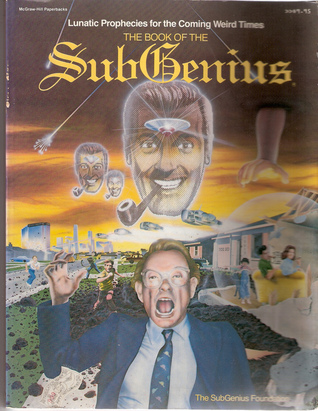
THIS BOOK SAVED MY LIFE. Well, not the book per se — although that definitely helped — but one of the guys who wrote it. The Book of the SubGenius told me that there were Others Out There who felt and thought as I did (or as differently as I did), and when I went through a suicidal phase back in ’85 I wrote to co-author Ivan Stang explaining my position. He immediately wrote back a two-page letter asking me not to do it and saying that if nothing else, I could always live for spite — that living could be a sort of revenge against the multiform factors contributing to my wanting to off myself.

Dang if he wasn’t right. Continue reading “First Graf(s): The Book of the SubGenius”

5 Thoughts: A Wrinkle is Time

1. “WHERE DOES THE TIME GO?” I asked. And the answer came: “Away.”

2. There’s really not much one can say about the passing of time, just as there is not much that can be said about falling in love or the taste of anything. They can only be experienced, not described. But oh! what an experience! we wouldn’t be fully human without it.

3. Two types of time there are: linear (future-to-present-to-past) and cyclical/anniversarial (round-and-round-and-round). Cyclical time is really spiral time; we commemorate the same events but reach a year older as we do so. Continue reading “5 Thoughts: A Wrinkle is Time”

Digital Vittles

ONCE UPON A TIME, I subsisted on frozen meals from Lean Cuisine and Amy’s Kitchen. Then I “got religion” via two sources: Tamar Adler‘s An Everlasting Meal — Cooking with Economy and Grace (which also contains one of the finest essays on cooking I’ve ever read), and the video version of Michael Pollan’s Cooked. Both preach the gospel of self-sufficient cookery and the evils of processed food, and filled me with the fiery zeal to cook for myself.

Of course, any budding home cook needs a bit of help. Fortunately, that help is only a click away. Here are some websites which send me daily emails filled with recipes, cooking tips and the various wisdoms of household management: Continue reading “Digital Vittles”

Fie on Death, and the Pale Horse He Rode In On

He was a man. Take him for all in all. I shall not look upon his like again.
— William Shakespeare, Hamlet

John Wheeler, c. 1981

WHEN I FIRST MOVED INTO an Oakland apartment in 1986 with John Woods “Wheels” “Spoonhead” “Calvin Biggins” Wheeler, our mutual friends were laying bets as to who would kill who first.

“We’re both so obnoxiously self-aggrandizing,” John told me. At that point in my life, I couldn’t argue with him. We were in our mid- to late-20s, after all, and such things are expected of young men. Continue reading “Fie on Death, and the Pale Horse He Rode In On”

Favicon Plugin created by Jake Ruston's Wordpress Plugins - Powered by Briefcases and r4 ds card.