
Tag: reading
The whole and entire purpose for Writing (outside of its own).
Literal Myths
DOES IT MATTER WHETHER OR not our sacred writings are historically accurate?
This question comes up every year at our synagogue Torah study, as people go to great lengths to try and explain the fantastical events of the text, especially the Book of Exodus, by relating them to natural events. Somebody is bound to mention that the Nile’s fish were killed by a blood-red tide, that locust swarms were a common (and in the Torah’s case, well-timed) occurrence, that Mount Sinai was a volcano, etc., etc., etc.
I feel that these good-natured and well-intentioned attempts at explanations may be unnecessarily missing the point. My own point of view is that what matters is the story. Continue reading “Literal Myths”
Why I Love: Books
 IT’S THEIR SMELL. IT’S THE way they feel in my hand(s). It’s the inner voices of different fonts. It’s that they’re a direct link from somebody else’s mind to mine. It’s the varied and variegated subject matter. It’s the endless fun of categorizing and re-categorizing a home library. It’s the way they look on the bookshelf. It’s the impression they make on guests. It’s the way they illustrate my thinking and interests. It’s the way they bend their shelves. It’s the painstaking search for new, used, and relevant titles. It’s browsing their indices, their bibliographies, and their tables of contents. Continue reading “Why I Love: Books”
Home Again
Unless you are at home in the metaphor, you are not safe anywhere.”
— Robert Frost
Why I Love: H.P. Lovecraft
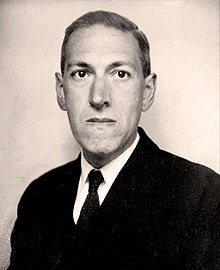 IT’S THE WAY HIS PROSE wraps me up like an amorous and itchy octopus. It’s the slow building of his narratives. It’s his quaint and dark sense of humor. It’s his search for literary identity (“There are my ‘Poe pieces’ and my ‘Dunsany pieces’ — but alas — where are my Lovecraft pieces?”). It’s his backward politics, which he eventually awoke from. (It’s also that he awoke from his antisemitism.) It’s his sense of atmosphere. It’s his malign genius. It’s the joy he took in corresponding with budding horror writers. It’s his love of cats. It’s his love of cheese (“How can anybody not like CHEESE?”). Continue reading “Why I Love: H.P. Lovecraft”
Metaphoraging Roundup: 2018
 IF A GOOD FRIEND HADN’T died this year and cured me of a years-long writer’s block, I wouldn’t be posting this.
But he did, so I am, proffering 2018’s Top 10 Viewed Pages and Posts at this writing:
1. Home page / Archives: (683 views) marks people who have happened by from seeing my URL posted in various places (including email .sigs, business cards, our local radio station and Facebook), and/or those exploring more than the seven posts visible on each “page.”
2. Fie on Death, and the Pale Horse He Rode In On (180) is John Wheeler’s cyber-eulogy, its link posted in numerous online fora where his friends could see it. Continue reading “Metaphoraging Roundup: 2018”
First Graf: Understanding Comics
 THIS BOOK WILL CHANGE THE way you think about (as author Scott McCloud concisely defines it) “sequential art.”
McCloud takes us inside the art form to explain how and why comics/graphic novels work. He tracks the 3,000-year history of Sequential Art from its Egyptian origins to the present day (well, the book’s 1993 publication anyway), breaking down the elements of composition, line, color, symbols, time, and the use of words; he even has a chapter on the unspoken relationship between panels and the space between them. Let’s let the chapter titles speak for themselves: Continue reading “First Graf: Understanding Comics”
Why I Love: Torah Study
IT’S THE ENDLESS INTELLECTUAL PUZZLE. It’s that Hebrew writing closely resembles Klingonese (well, it does; come to think of it, so does some of the sentiment). It’s belonging to the 3,000-year-old Permanent Floating Book Club. It’s the spectra, vagaries and levels of meaning. It’s the idea of “seventy faces of Torah,” meaning that each word (even letter!) can be looked at in multiple ways. It’s engaging with the minds of long-dead people who live on in your study. It’s the level playing field (“Only a little is all anyone knows of Torah,” quoth the greybeard rabbi). It’s seeing how far the Sages can stretch a metaphor. Continue reading “Why I Love: Torah Study”
First Graf: An Everlasting Meal
 THIS IS THE BOOK THAT inspired me to cook for myself. It demystified for me the cooking process, shored up my nascent resolve, and gave me the mental tools I needed to commit the revolutionary act of not settling for or eating processed food anymore (aside from cheese, bread, and other fermented eatables, of course). It also contains, as Chapter 12, the greatest food essay ever written, which — as I have noted elseblog — adjures you to call upon your inner chef to arise when you’re sick of cooking. (No mean feat, that.) Continue reading “First Graf: An Everlasting Meal”
First Graf: The Gourmet’s Lexicon
 SITTING ON MY BOOKSHELF IS a slim purple volume from 1982 called The Gourmet’s Lexicon, an encyclopedic and indispensable listing of cuisines, dishes, and cooking techniques and styles. What Webster was to words, author Norman Kolpas is to food. Often I will leaf through it at random, trying to expand my cookery-consciousness; other times I will use it to look up something I see mentioned in a recipe or on a cooking documentary. (I’ve even used it as a basis for a few Prosatio Silban tales.) Whatever the need or occasion, it’s a fine ingredient in any cook’s or foodie’s library. Continue reading “First Graf: The Gourmet’s Lexicon”
First Graf(s): The Book of the SubGenius
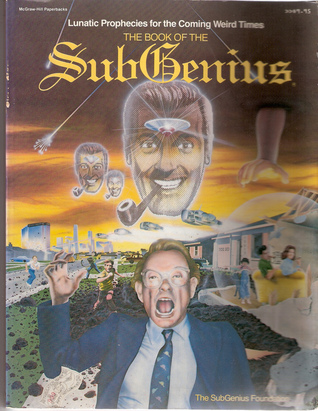 THIS BOOK SAVED MY LIFE. Well, not the book per se — although that definitely helped — but one of the guys who wrote it. The Book of the SubGenius told me that there were Others Out There who felt and thought as I did (or as differently as I did), and when I went through a suicidal phase back in ’85 I wrote to co-author Ivan Stang explaining my position. He immediately wrote back a two-page letter asking me not to do it and saying that if nothing else, I could always live for spite — that living could be a sort of revenge against the multiform factors contributing to my wanting to off myself.
Dang if he wasn’t right. Continue reading “First Graf(s): The Book of the SubGenius”
First Graf: The Illuminati Papers
 THE LATE ROBERT ANTON WILSON is perhaps the greatest influence on my life and thought since even before Rabbi Akiva. His spirit is sprinkled here and there throughout this blog like raisins in a cake. A prolific author, RAW (as he’s known) wore many literary caps: conspiracy chaser, little-L libertarian, mind-expansionist, novelist, futurist, comedian, neophile, mystic, poet, prophet. Continue reading “First Graf: The Illuminati Papers”