First Graf: Sidereus Nuncio

PERHAPS THE GREATEST THING ABOUT Galileo Galilei’s first publication, translated from the Latin as The Sidereal Messenger, is his sense of adventure at being the first known human to telescopically observe and painstakingly chronicle the night sky.

Galileo recorded his unprecedented experience in 1610 CE, a time of adventurous European discoveries in general. His detailed and methodical observations will be thrilling to anyone also observing the same celestial sights for the first time through a simple 20x (read: low-power) backyard telescope. Science historian Albert Van Helden’s superb 1989 translation reveals Galileo’s excitement and wonder on every page, and adds valuable context via explanatory bookending and notes.

That era being one of grand aspirations and flowery speech, Galileo’s grateful bow to his patron, Duke Cosimo II de Medici, is fully titled, “SIDEREAL MESSENGER, unfolding great and very wonderful sights and displaying to the gaze of everyone, but especially philosophers and astronomers, the things that were observed by GALILEO GALILEI, Florentine patrician and public mathematician of the University of Padua, with the help of a spyglass lately devised by him, about the face of the Moon, countless fixed stars, the Milky Way, nebulous stars, but especially about four planets flying around the star of Jupiter at unequal intervals and periods with wonderful swiftness; which, unknown by anyone until this day, the first author detected recently and decided to name MEDICIAN STARS.” (That honorific didn’t stick; instead, the “four planets” are now called by astronomers the “Galilean moons.”)

Let us skip Galileo’s five-page introductory paean to the Duke de Medici and dive right into the first paragraph of the work itself:

In this short treatise I propose great things for inspection and contemplation by every explorer of Nature. Great, I say, because of the excellence of the things themselves, because of their newness, unheard of through the ages, and also because of the instrument with the benefit of which they make themselves manifest to our sight.

First Graf: Torah

(BE HONEST — YOU MUST HAVE known I’d get around to this one eventually, right?)

I make no rigid claims of authenticity, accuracy, or authorship for this work. As far as I’m concerned, this is “simply” a collection of ancient Jewish campfire didactics which were knit together in somewhat final form some 2,500 years ago. And everything about it is open to (ideally informed) debate. That’s kind of the point, actually: to give us, and have given us, something to discuss as a community as we grope our way through the often-cruel centuries. Torah (literally, “teaching” or “instruction”) is what has kept us going for as long as we’ve been here — it ain’t the lox and bagels, folks. Continue reading “First Graf: Torah”

First Graf: The Dharma Bums

IN MANY WAYS, THIS 1958 book is better than the earlier On the Road. Kerouac’s signature stream-of-consciousness narrative style is more flowy, and the novel’s lionized centerperson (poet Gary Snyder, or “Japhy Ryder” as tDB calls him) a more noble character than OtR’s Neal Cassady — pardon me, “Dean Moriarty.” The Buddhism as portrayed is sympathetically casual without being didactic, which I suppose is also true of Buddhism itself. The book opens up in Los Angeles, where Kerouac (ahem, “Ray Smith”) is trying to “get the hell out of Dodge…” Continue reading “First Graf: The Dharma Bums”

First Graf (well, page): Harold and the Purple Crayon

THE FIRST BOOK I EVER read from cover to cover was Crockett Johnson’s 1955 work, Harold and the Purple Crayon. If you’re not familiar with it, it goes like this: A small boy in one-piece pajamas draws with, well, purple crayon, on an endless expanse of whitespace. His drawings don’t exactly come to life, but they do become interactively real (to him, anyway). The drawings are accompanied by spare but informative narration, but the real story is amply told by the charming illustrations. In all, Reb Crockett wrote seven Harold adventures; they are aimed at young would-be readers, and sort of obviate the whole Dick and Jane thing so popular when I was a tyke. Continue reading “First Graf (well, page): Harold and the Purple Crayon”

First Graf: The Histories

WERE IT NOT FOR HERODOTUS — lauded as the “Father of History,” derided as the “Father of Lies” — we would know nothing of, among other things, the tale of King Leonidas and the 300 Spartans and how it affected the Ascent of the West.

The Histories is more than a simple record of who-said-and-did-what-when. In it you will find plenty about the war between the Greeks and Persians, but also contemporary details of Egyptian and Babylonian culture; how to gather cinnamon despite the objections of giant bats “who shriek alarmingly and are very pugnacious;” an account of the horseback-warrior Scythians; many tales both tall and short; and much fodder for D&D campaigns or pleasant afternoon reveries. Continue reading “First Graf: The Histories

First Graf: The Adventures of Sherlock Holmes

ACTUALLY, SINCE T.A.o.S.H. IS THE first published collection of all Sherlock Holmes stories, here is (also) the First Graf of “A Scandal In Bohemia,” being the first of the tales in said collection. It’s unfortunate that Sherlock Holmes has become a bit of cultural cliche and byword, but it can’t be helped — our culture is steeped in such cliches, where what was once seminal now comes off as derivative. Sir Arthur Conan Doyle’s most famous creation, whom he eventually tired of and tried killing-off only to find that the clamorous 19th-Century reading “publick” would have none of it, stands on his own eternal literary measure. A little taste to whet the appetite, then? Continue reading “First Graf: The Adventures of Sherlock Holmes”

First Graf: Alice’s Adventures in Wonderland

Click to enlarge
THIS WAS THE FIRST FANTASY I ever read — at the tender age of six or seven, IIRC — and remains one of my most beloved and oft-quoted books. In some ways it’s similar to Bullwinkle or SpongeBob Squarepants: touted as kiddie fare, but really told with a more mature audience in mind. Lewis Carroll’s puzzles and paradoxes (and John Tenniel’s classic illustrations) have been discussed for almost as long as the book has seen print, and some of the former’s riddles (“Why is a raven like a writing desk?”) remain today as enigmatic as Zen koans. Continue reading “First Graf: Alice’s Adventures in Wonderland”

First Graf(s): The New Hacker’s Dictionary

THE DEFINITION OF “HACKER” HEREIN is “a person who enjoys exploring the details of programmable systems and how to stretch their capabilities, as opposed to most users, who prefer to learn only the minimum necessary.” In 2019, we have all sorts of hackers — computer hackers, life hackers, biohackers, mindhackers — all trying to understand, implement, and twiddle with hidden qualities and little-known or -understood features of whatever it is they’re hacking.

The New Hacker’s Dictionary, adapted from and AKA “The Jargon File,” got its start in 1975 as a text file (accessible by what your Grandpa used to call “FTP“) shared over networks by the original (computer) hackers. Continue reading “First Graf(s): The New Hacker’s Dictionary”

First Graf: The Physiology of Taste

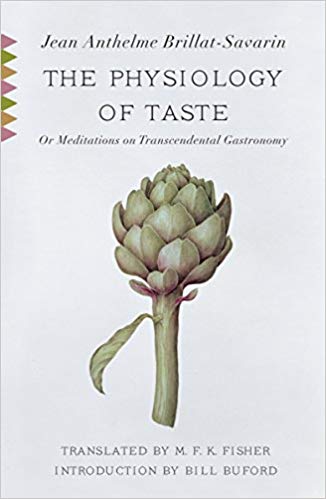
THE FIRST BOOK THAT ACTUALLY got me thinking about food as something other than tasty fuel with which to stuff my face was Jean Anthelme Brillat-Savarin’s 1825 work, The Physiology of Taste; or, Meditations on Transcendental Gastronomy. Part travelogue, part autobiography, part science text, Physiology deals with such pleasant problems as how to cook a fish that’s too big for the oven; the exacting method of digestion; why restaurateurs do what they do; how to survive a revolution; how to lose weight; and how to make the perfect cup of hot chocolate or coffee. Continue reading “First Graf: The Physiology of Taste”

First Graf: The Timetables of History

AN AWE-INSPIRING WORK, The Timetables of History: A Horizontal Linkage of People and Events by Bernard Grun is one of those books that have to be seen, and leafed through, to believe. (My own copy, of the 591-page edition First Touchstone Edition which begins at 5000-4001 BCE, only goes up to 1978 CE; revised editions are available through your local independent bookstore.) As the title states, Timetables proffers to the curious what happened in each year (or, in the book’s early parts, each date1-to-date2 era) in seven categories: History and Politics, Literature and Theater, Religion and Philosophy, Visual Arts, Music, Science and Technology, and Daily Life. Continue reading “First Graf: The Timetables of History”

First Graf: Understanding Comics

THIS BOOK WILL CHANGE THE way you think about (as author Scott McCloud concisely defines it) “sequential art.”

McCloud takes us inside the art form to explain how and why comics/graphic novels work. He tracks the 3,000-year history of Sequential Art from its Egyptian origins to the present day (well, the book’s 1993 publication anyway), breaking down the elements of composition, line, color, symbols, time, and the use of words; he even has a chapter on the unspoken relationship between panels and the space between them. Let’s let the chapter titles speak for themselves: Continue reading “First Graf: Understanding Comics”

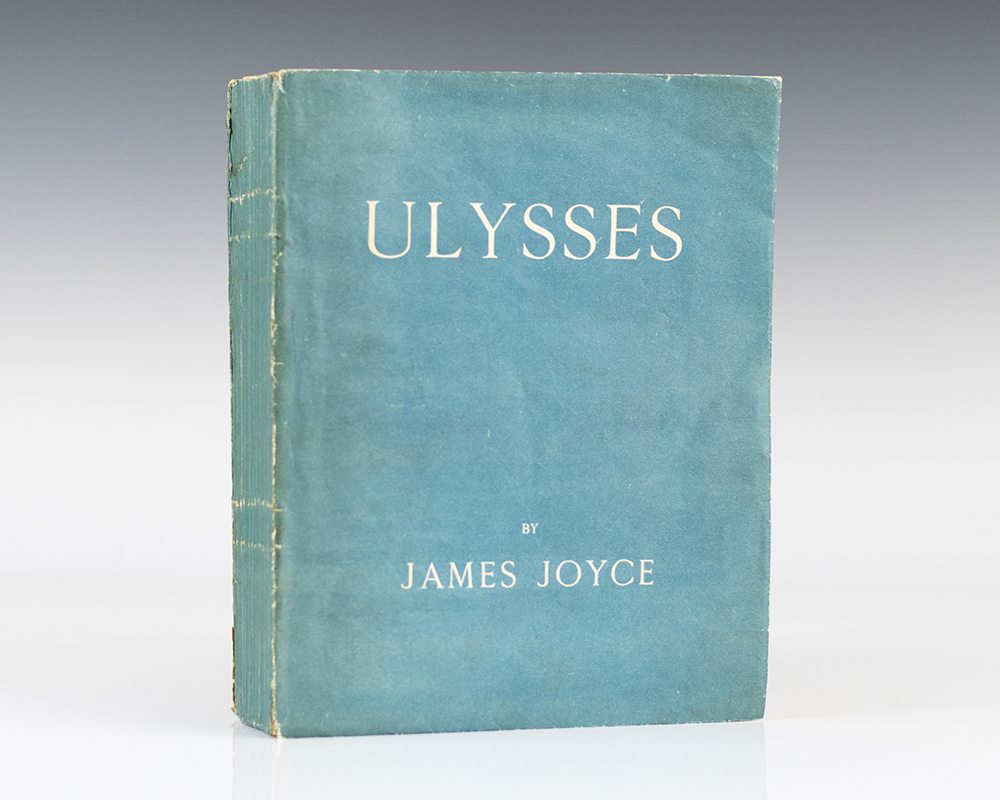
First Graf: Ulysses

THERE’S NOT MUCH ELSE TO say about James Joyce’s magnum opus (although some would apply that descriptor to Finnegans Wake) that hasn’t been said, and by greater and more erudite scholars than this reporter: takes place over 24 hours in 1904 Dublin? Check. Semi-autobiographical? Check. Jewish protagonist? Check. A map of Odysseus’ voyage home from Troy to Ithaca? Check. Source of the annual Bloomsday celebration? Check. Bedeviler of censors and Mrs. Grundys the world over? Oh, most definitely check.
Continue reading “First Graf: Ulysses”

Favicon Plugin created by Jake Ruston's Wordpress Plugins - Powered by Briefcases and r4 ds card.