Sailing the Sea of Talmud (And Related Waters)

IF YOU STUDY ANYTHING, AS the salesman sang in the opening scene of “The Music Man,” “You’ve got to know the territory.”

Case in point: Every Wednesday morning for the past few years, I have conducted an hour-long living-room learning session we’ve come to call “Text Study,” which has included in-depth forays through the Bible’s early prophetic books, Maimonides’ Mishneh Torah, and currently, the Book of Psalms. Continue reading “Sailing the Sea of Talmud (And Related Waters)”
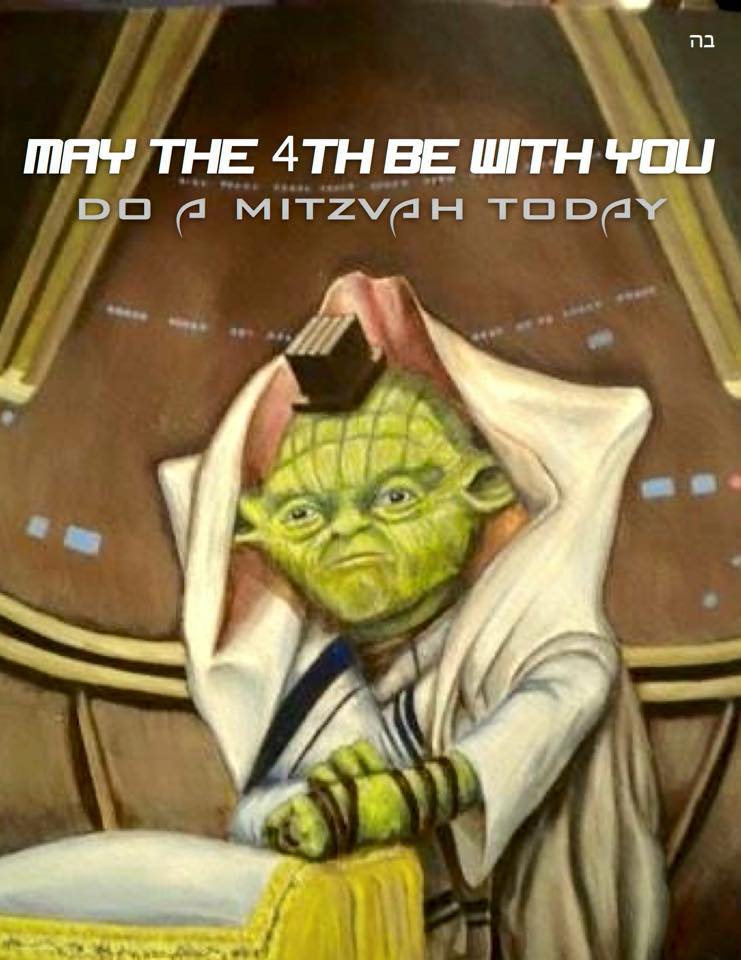
5 Thoughts: The REAL First Fandom

1. WHAT IF WE LOOKED AT Torah as if it were another created world, a la the works of Tolkien, Roddenberry, or Lucas? and its adherents as members of (perhaps) humanity’s oldest text-based fandom?

2. For one thing, they already bear a strong resemblance. Consider “midrash,” from the Hebrew word meaning “to study” or “interpret.” Midrashim are rabbinic stories addressing behind-the-scenes bits of Torah that aren’t explicit in the text: why did Abraham become a monotheist? Who was the first person to cross the Red Sea? Why are there two creation stories in the book of Genesis? Continue reading “5 Thoughts: The REAL First Fandom”

Midrash Noach

DESPITE THE ALLURING INTRICACIES OF Mosaic law of the past few months, it’s nice to be once again studying the Torah’s classic origin tales. This week we see a sea change (literally) in the way humans relate to their world and each other, with two stories of human intransigence and Divine response: the Flood and the Tower of Babel.

The Flood came about, so our rabbis tell us, because people didn’t respect the boundaries which had been set up at Creation. Murder and violence were the order of the day. God decided to start over again by washing the earth clean and re-beginning humanity with Noach and his family.

The Tower united humanity in one great work, but at the cost of challenging God. Continue reading “Midrash Noach”

First Graf: The Jewish Catalog

Fig. 1
WHAT HAPPENED WHEN THE COUNTER-CULTURAL agents of the 1960s (re)discovered their Yiddishkeit (Jewishness)? A trio of them (and many others) produced the now-classic The Jewish Catalog: a do-it-yourself kit.

As the subtitle implies, the book is chock-full of homemade ways to “do Jewish,” from making your own challah, tying and laying tefillin, navigating a siddur (prayerbook) or the Torah, burying someone with dignity, mystically understanding Shabbat, navigating the “Jewish Establishment” and much much more. Published in 1973 (and serially reprinted since then), it spoke to the nascent anti-authoritarian paradigm of “ethnic pride” and “finding your roots” that was then sweeping the United States. It features articles from such luminaries as Rabbi Zalman Schachter (founder of the Jewish Renewal movement) to Holocaust scholar Deborah Lipstadt, and sparked a communal yearning for authenticity and connectedness that still resonates today. The lavishly illustrated book spawned two sequels and is still relevant to anyone seeking to jump into the sea of Judaism: Continue reading “First Graf: The Jewish Catalog”

The Loudest Silence

THE TRICK IS: HOW TO scream at the top of your lungs without making a sound.

That’s one of the lessons taught by Rebbe Nachman of Breslov, a Chasidic teacher who lived in Ukraine at the turn of the 19th century CE. R’ Nachman, who suffered deeply from depression throughout his life (and who once said, “It is a great mitzvah [religious obligation] always to be happy”), taught that one can release one’s emotions by focusing them into a “silent scream:” Continue reading “The Loudest Silence”

Two Letters, One Torah

THE FIRST THING YOU NEED to know is that, in Hebrew, the letter D (dalet) looks a lot like the letter R (reish). It’s so easy to confuse the two, in fact, that Source Critics (those who see the Torah as knit together from several other texts) like to explain some of Torah’s eccentricities as scribal errors — handmade typos, if you will.

Now, I mainly hold to the Source Critics’ view of the Torah, in that I believe the text we have now is a redacted compendium of several older documents (a theory better known as the Documentary Hypothesis, or DH). Unlike the critics, however, I don’t believe the Redactor was slipshod; rather, that what we call “mistakes” were actually deliberate features, put there in order to keep us talking about the Torah for lo these many millennia. Case in point, the debate over Deuel vs. Reuel: Continue reading “Two Letters, One Torah”

Sacred Polyphony

The Torah can be taken, among other things, as a ‘polyphonic’ text, or a loose anthology of competing claims regarding the legal stipulations of the covenant. The edited Torah, following this approach, was not meant to be read as a practical and coherent handbook on how to carry out the law, but as a collage of competing understandings of the requirements of the covenant.”

— Rabbi David Frankel

Minute Mitzvah: Saying the Shema

Today: Say the Shema.

Explanation: The Shema (“Listen, Israel: יהוה our G?d! יהוה One!”), from Deuteronomy 6:4, is the statement of Jewish faith-commitment. It’s the first prayer we learn after birth and, if we time it right, the last prayer we say before death. Although it’s actually three paragraphs long (see http://www.jewfaq.org/shemaref.htm for the complete text in both Hebrew [original and transliteration] and English), halacha (Jewish law) says the first verse is the most important — so much so that it can be spoken in whatever language the speaker understands. Continue reading “Minute Mitzvah: Saying the Shema”

First Graf: Path of the Just

MUSSAR (מוסר) IS A HEBREW TERM usually translated as “ethical behavior/discipline,” or to put it more succinctly, the fine art and science of being a mensch. Its roots are almost as old as Judaism itself — according to Genesius, it’s mentioned about a dozen times in the Tanakh (the Hebrew Bible) — but the so-called “Mussar Movement” (people gathering together to help each other become better people) first flourished in the 19th century, largely among the Orthodox Jews of Lithuania. It has undergone a renaissance of late, and several of the Mussar classics are available today. One such book is The Path of the Just (Mesillat Yesharim). Written in the 18th century by Rabbi Moshe Chayim Luzzato (“Ramchal”), it takes the reader through a step-by-step interpretation of Mussar traits as listed in the Talmud. R’ Luzzato begins his work in typically humble style, apparently siding with Ecclesiastes that there’s “no new thing under the sun”: Continue reading “First Graf: Path of the Just”

Lamed-Vavniks, Unite!

adtnAre you a Lamed-Vavnik?

According to Jewish tradition, there are 36 exceptionally righteous (read: supermensch-like) people in the world in each generation, and without whom the world would cease to exist. (In Hebrew counting, 36 is “lamed vav” (lamed = 30, vav = six)). The thing about Lamed-Vavniks is that they are secretly righteous; they do their deeds under the cover of anonymity. Continue reading “Lamed-Vavniks, Unite!”

Confronting Evil

(From a friend, for Yom Hashoah/Holocaust Remembrance Day.)

April 15, 1965
יוסף דוב סולוביצ’יק
JOSEPH SOLOVEITCHIK

Dear Dr. Vogel:

I received your letter. Of course, you may quote me.

The gist of my discourse was that Judaism did not approach the problem of evil under the speculative – metaphysical aspect. For such an inquiry would be a futile undertaking. As long as the human mind is unable to embrace creation in its entirety and to gain an insight into the very essence and purposiveness of being as such it would not succeed in its attempt to resolve the dilemma of evil. Continue reading “Confronting Evil”

Favicon Plugin created by Jake Ruston's Wordpress Plugins - Powered by Briefcases and r4 ds card.